
Romans 8:28 is one of the most quoted verses in the Bible—and one of the most misread. People toss it around like a spiritual bandage, as if Paul wrote, “Relax, everything will be fine.” He didn’t....
Romans 8:28 is one of the most quoted verses in the Bible—and one of the most misread. People toss it around like a spiritual bandage, as if Paul wrote, “Relax, everything will be fine.” He didn’t.
The verse is stronger, stranger, and way more honest than that. It doesn’t pretend pain is pleasant. It doesn’t call evil good. It says something more disruptive: God can take the mess, the grief, the waiting, and the parts of your story that feel like they’re falling apart, and work them into something good.
That raises a serious question: what kind of “good” are we talking about?
If you’ve ever heard Romans 8:28 quoted in a way that felt a little too polished, you’re not crazy. This verse has been flattened by clichés for years. But when you read it in context, in the NKJV, it gets a lot more interesting:
“And we know that all things work together for good to those who love God, to those who are the called according to His purpose.”
That’s not a cheap promise. That’s a loaded one. And it changes how a Bible study works, how suffering is understood, and even how you wear your faith in public when you’re not in the mood for a speech but still need a reminder. Some people wear scripture on a shirt or carry a verse in a design from /create because they need truth close to the body, not just in the head. That’s not corny. That’s survival.
Context: Paul Wrote This to Real People, Not Hobbyists
Romans wasn’t written to a group of people sitting in a comfortable room waiting for an inspirational moment. Paul wrote to believers in Rome around A.D. 57, a city that was powerful, political, and often brutal. The church there was made up of Jewish and Gentile followers of Jesus learning how to live together under pressure.
That matters because Romans 8:28 doesn’t float alone. It sits inside a chapter about struggle, suffering, hope, and the groaning of creation itself. Paul has already said there is “no condemnation” for those in Christ Jesus, but he has not said there is no pain. In fact, he says the opposite. Life hurts. The world is fractured. Even believers groan.
I remember talking with a friend after a job loss that came out of nowhere. Someone had slapped Romans 8:28 on the problem like duct tape. It didn’t help. What helped was reading the chapter slowly and realizing Paul never denied the wound. He just insisted it wasn’t the final word. That’s different.
Another time, I watched a woman wear a simple scripture-inspired tee with Romans 8:28 printed on it during a week when her family was in chaos. She told me she didn’t wear it to impress anyone. She wore it because she needed to see it every time she passed a mirror. That’s the kind of visible declaration that can keep a person steady when their emotions are doing cartwheels.
What It Actually Says in the Original Language
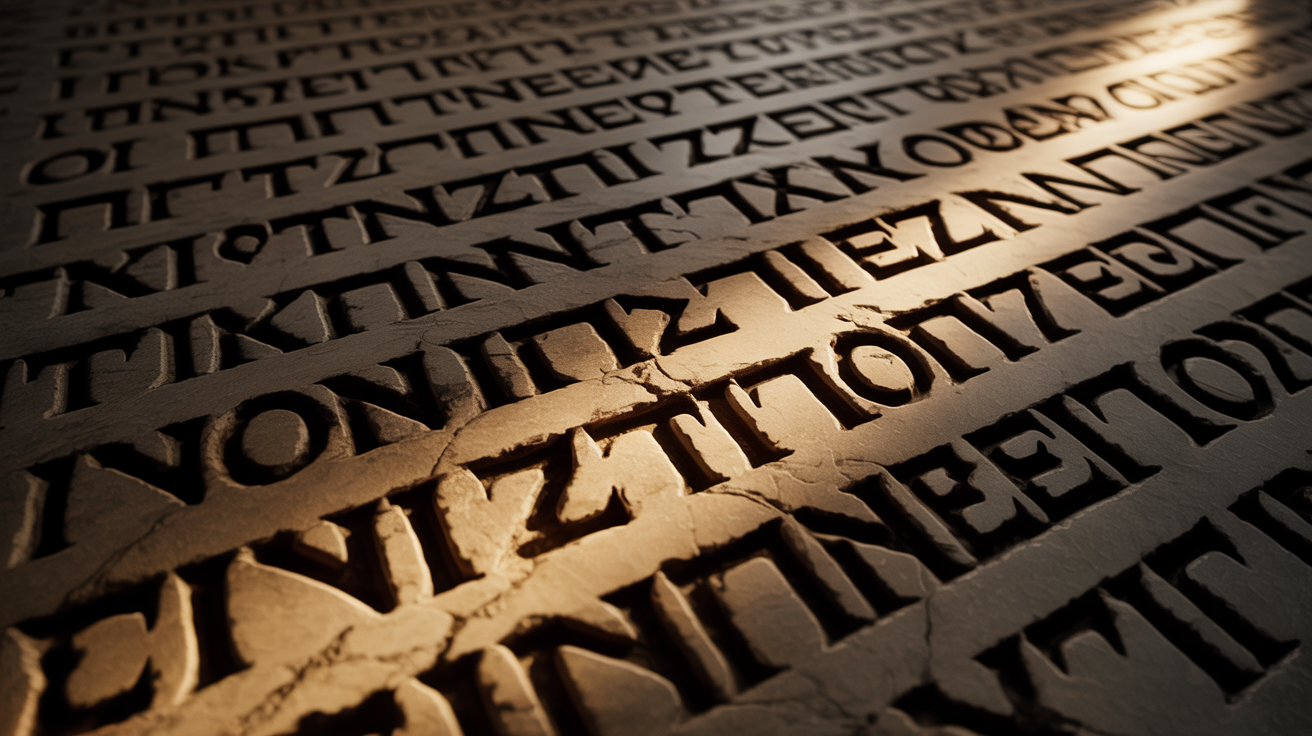
The key phrase in Romans 8:28 comes from the Greek synergei, which means “works together” or “cooperates.” It’s the root idea behind the word “synergy,” but don’t let modern buzzwords ruin it. Paul isn’t saying every event is pleasant. He’s saying God is actively causing all things to cooperate toward a specific outcome.
Then there’s the word translated “good,” agathon. In everyday speech, that can mean beneficial, useful, morally good, or fitting for a purpose. It does not automatically mean comfortable. It does not mean easy. It does not mean you get the exact life plan you drafted on a hopeful Tuesday morning.
And “purpose” comes from prothesis, which refers to intention, design, or plan. Paul is saying God is not improvising. He has a purpose in view.
So, if you want the verse in plain English: God is at work in every part of life for the benefit of those who belong to Him, according to His intended design. That’s a lot less sentimental than the bumper-sticker version. And a lot more solid.
Also notice the phrase starts with “And we know.” Paul isn’t guessing. He’s not hoping. He’s speaking with confidence rooted in God’s character. That confidence is one reason Romans remains a favorite in any serious Bible study. It doesn’t flatter us. It steadies us.
What Most People Miss About “All Things”
Here’s the big misread: people often think “all things” means everything will feel good eventually. That’s not what Paul said.
“All things” includes betrayal. Delay. Confusion. Doors closing. Prayers that seem to bounce off the ceiling. A diagnosis. A breakup. A season where you’re doing everything you know to do and still feel like your life is one step behind.
Paul does not call those things good. He says God works them together for good. That’s a massive difference. A cook does not pretend every ingredient tastes good by itself. Vinegar alone? Bitter. Garlic by the spoon? Please, no. But mixed with the right hands and heat, something useful can come out of ingredients nobody would eat on their own.
The verse is not saying every event is God’s will in the same way. Some things are the result of sin, broken systems, or bad choices—ours and other people’s. But God is so wise, so patient, and so sovereign that He can thread His purpose through even wreckage.
I once heard someone say, “Romans 8:28 is not about God making lemons into lemonade. It’s about God making a whole meal out of the bruised fruit.” That stuck with me. Maybe because it sounds less polished and more true.
If you’ve ever wanted a tangible reminder of that truth, that’s where something as ordinary as wearing scripture can matter. A shirt, a bracelet, or a design that carries Romans 8:28 can become a quiet sermon to yourself. Not because fabric is magic. Because reminders matter when your faith feels thin.
Why the Verse Is About More Than Your Personal Success
Romans 8:28 is often treated like a promise that God will make my life turn out the way I want. But the next verse corrects that mindset fast. Romans 8:29 says,
“For whom He foreknew, He also predestined to be conformed to the image of His Son...”
That’s the “good” Paul has in view. Not merely convenience. Not just career wins or smooth relationships or a life with no detours. The good is Christlikeness.
That’s the part many people miss because it’s not flashy. It doesn’t sell as well as “God’s plan for your dream life.” But it is better. Harder sometimes, yes. Better, absolutely.
This means the point of your suffering is not always explanation. Sometimes it is formation. God may be using what hurts you to shape what reflects Jesus in you. That’s not sentimental. That’s steel.
Think about how often we ask God to remove the pressure when He may be using pressure to remove something else: pride, self-reliance, shallow faith, the need to control every outcome. That’s not a pleasant thought. But it’s honest.
And if you’re honest, you already know this is how life works. The deepest growth rarely comes from easy seasons. It comes from the ones you didn’t choose. The Bible never wastes that reality. It redeems it.
How Romans 8:28 Fits the Whole Chapter
Romans 8 is not a fortune cookie chapter. It moves from no condemnation, to life in the Spirit, to suffering, to hope, to glory. Paul says creation itself is groaning. He says believers groan too. Then he says the Spirit helps us in our weakness.
That means Romans 8:28 is not a random encouragement floating above pain. It is the anchor inside a stormy chapter. The verse says God works all things together for good, but that good is surrounded by groaning, weakness, and waiting.
That’s why it lands so differently when you read it slowly. It’s not the denial of grief. It’s the conviction that grief does not get the final edit.
For the original audience, that would’ve mattered a lot. Rome wasn’t exactly a safe space for believers to claim victory slogans. Their lives were full of tension. Paul gives them a bigger frame than immediate comfort. He points them toward God’s purpose, not their mood.
That’s also why the verse can’t be turned into a quick fix for someone else’s pain. If a friend is in the middle of loss, Romans 8:28 is not a permission slip to rush past their tears. It’s a reason to stay steady, speak honestly, and trust that God is working when nothing feels resolved.
Real-World Application: What This Means on a Tuesday
Here’s where the verse gets practical, because theology that never touches Tuesday afternoon is just decoration.
First, Romans 8:28 invites you to stop demanding that every season make sense right away. Sometimes the most faithful thing you can say is, “I don’t understand this yet, but I trust that God is not wasting it.” That’s not passive. That’s courageous.
Second, it helps you interpret your story more carefully. A closed door may not be rejection; it may be redirection. A delay may not be denial; it may be preparation. A painful loss may not be proof that God left the room. It may be proof that He’s present in the room you didn’t expect.
Third, this verse can change how you pray. Instead of only asking, “God, fix this fast,” you can also ask, “God, what are You forming in me here?” That prayer is harder. It’s also deeper.
And if you’re the kind of person who likes visible reminders, there’s something grounding about creating a personal piece with a verse like Romans 8:28—something that says what your heart needs when your mind is tired. A custom shirt or design can be more than style. It can be a daily declaration that your story is not random. Sometimes I’ll point people to /shop or /blog when they’re looking for a way to keep truth in front of them without turning it into a performance.
That’s not about spiritual fashion for show. It’s about living in a world that constantly tells you to trust appearances, while scripture tells you to trust God’s purpose instead.
That scripture that just spoke to you? Our AI turns your personal phrase into a one-of-a-kind t-shirt design. No two are ever the same.
What Romans 8:28 Does Not Promise
Let’s be clear, because clarity is kindness.
Romans 8:28 does not promise that every event will be pleasant. It does not promise that every pain will be explained quickly. It does not promise that you’ll always like the route God takes. And it definitely does not promise that everything will work together for the same kind of “good” you would pick if you were running the universe.
It also isn’t a magic phrase to silence hard conversations. You can’t toss it at trauma and call it comfort. That’s lazy, and honestly, it’s cruel. Real faith doesn’t erase lament. It makes room for it.
Paul himself knew hardship. He knew imprisonment, rejection, sleepless nights, and danger. He was not writing from a life of uninterrupted ease. That gives the verse weight. He’s not selling theory. He’s speaking from a world that had already tested his beliefs.
So when believers say, “all things work together,” they’re not pretending the pieces are pretty. They’re saying the Artist is competent even when the canvas looks wrecked.
How This Changes the Way You Read God’s Plan
The phrase “God’s plan” gets thrown around a lot, usually with very little precision. Romans 8:28 gives it shape. God’s plan is not primarily about making your path the least complicated one possible. It’s about bringing you into the likeness of Christ and weaving your life into His purpose.
That means God’s plan can include detours. It can include waiting rooms. It can include the kind of change you wouldn’t have chosen but later thank Him for. It can include heartbreak that teaches you what shallow confidence never could.
When people say Romans 8:28 after something painful, they’re not always wrong. They’re just often incomplete. The verse isn’t saying the bad thing was good. It’s saying the bad thing is not stronger than God’s purpose.
That matters when your faith is quiet, not loud. It matters when you’re not sure what to say. It matters when all you can do is whisper, “Lord, I believe You’re working.” Sometimes that whisper is the most honest Bible study you’ll ever do.
And yes, sometimes a visible reminder helps. A simple verse on a hoodie, a shirt, or a piece you make yourself can keep truth within reach when your thoughts start freelancing. Faith isn’t less real because it’s worn where you can see it. Sometimes it becomes more real because of that.
Browse our curated collection of faith apparel — each design crafted with intention and rooted in God's Word.
Real-World Application
- Read Romans 8:18–30 together. Don’t isolate verse 28. The context changes everything.
- Ask a better question. Instead of “Why is this happening to me?” try “What might God be doing in this that I can’t see yet?”
- Stop calling pain good. Call it painful. Then trust that God can still work through it.
- Use a visible reminder. Wearing scripture can help anchor your mind when your emotions are loud.
- Create something personal. If Romans 8:28 has carried you, consider turning that verse into something you can keep close—something made for your own story, not just borrowed from someone else’s.
Maybe that’s the real power of Romans 8:28. Not that it explains everything, but that it refuses to let suffering be the final authority. It tells the truth about the ache, and then it tells a bigger truth about God.
So here’s the question that matters: if God is truly working all things together for good, what part of your story are you still treating like wasted space?
Share this article